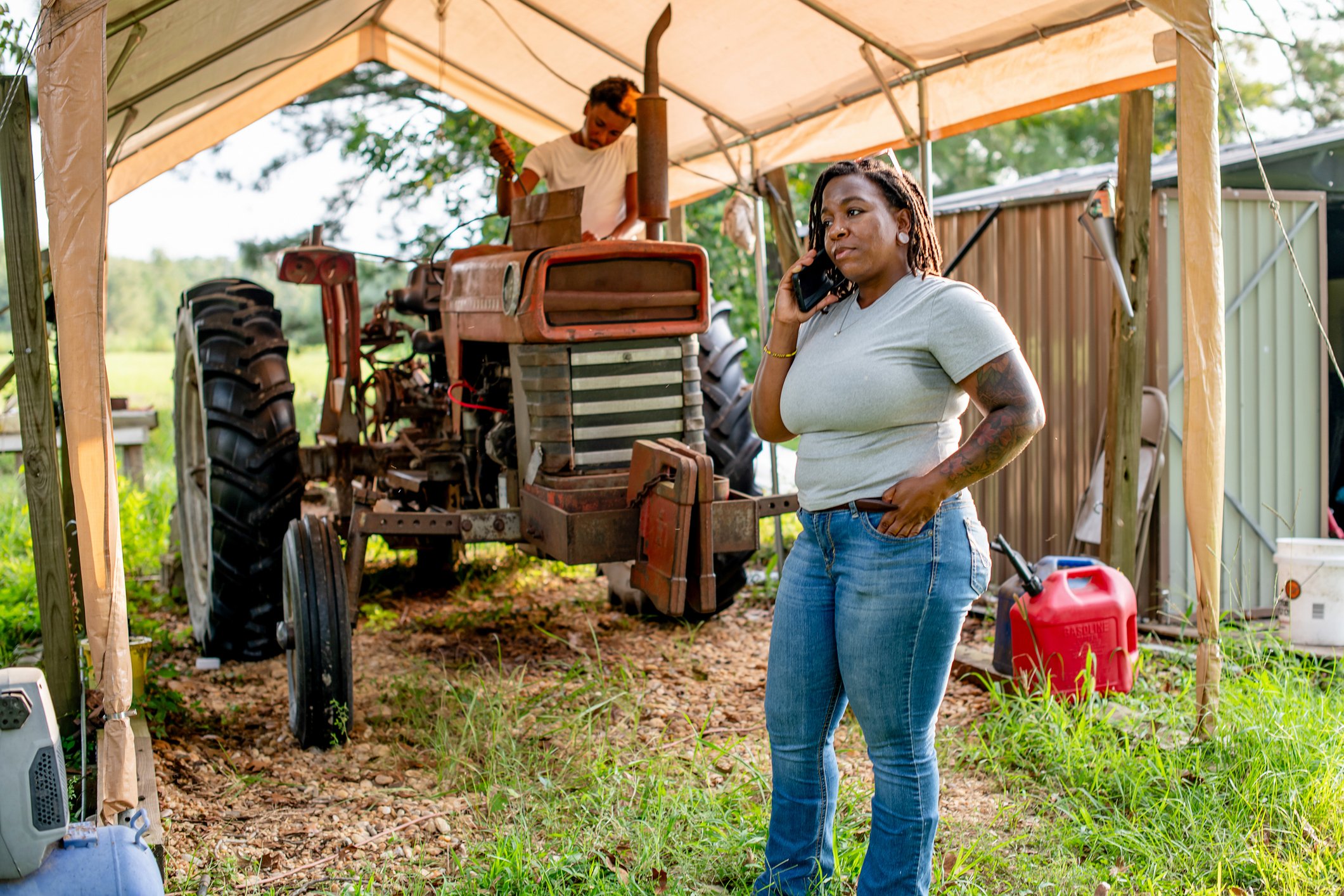
The Trump administration’s policies have been detrimental to many American farmers, with Black and other minority farmers left particularly vulnerable. But at a time when disadvantaged farmers could use additional support from the federal government, the board tasked with promoting their interests has been left on indefinite hiatus by the president, leaving board members reaching out to Congress to seek answers.
Trump administration pauses work of committee dedicated to minority farmers
Capital B reported that the Advisory Committee on Minority Farmers has ceased to function since President Trump returned to the White House in 2025. Committee members were informed in February 2025 via email that the board was “on pause,” with the message also describing the committee as “operationally frozen.” Sarah Bell, an Asian American farmer and one of the 15 members serving on the committee when Trump took office, noted that she and the rest of the committee had conducted meetings, both virtually and in Tarrytown, New York, and gathered information about United States Department of Agriculture services and programs during the first year of her two-year term. The committee was preparing recommendations for the Secretary of Agriculture when its activities were halted. Bell talked to Capital B about the committee’s work suddenly being halted, saying “It’s really disappointing, but I’m not surprised.”
The Advisory Committee on Minority Farmers, created in 2008, is the only Department of Agriculture committee dedicated to addressing the specific needs of Black farmers. In 2025, however, USDA confirmed that the committee “did not meet or make recommendations.” Harvey Reed III, a member of the Beginning Farmers Coalition who also served as a member of the committee between 2015 and 2023, has reached out to the House Agriculture Committee for answers about the minority farmers committee. ““It’s outrageous, if not surprising, that the Trump Administration appears to have sidelined this committee,” said Rep. Shontel Brown, the vice ranking member of the House Agricultural Committee, to Capital B about the advisory committee freeze. “The Administration cannot simply ignore a legal mandate because it doesn’t fit its agenda.”
Black farmers face hostile and harmful policy environment under Trump
The pause of the Advisory Committee on Minority Farmers’ work comes as Black and other minority farmers face especially challenging times under the Trump administration. As Blavity previously reported, the Trump administration’s anti-DEI policies, as well as its tariff policies and heavy-handed immigration enforcement campaign, have disproportionately impacted Black farmers, who were already an underrepresented and vulnerable group within the agricultural sector. Under Trump, USDA has cut funding to Black and other minority farmers, such as eliminating its program for “socially disadvantaged” farmers, and Black farmers have had to fight to restore some of the grant funding that was cut by the Trump administration’s anti-DEI policies. These hardships have exacerbated the impact of decades of discriminatory policies against Black farmers.
The Advisory Committee on Minority Farmers was created under President George W. Bush and first operated under President Barack Obama as a tool for connecting Black and other minority farmers to USDA resources. The effectiveness of the committee has been disputed. While the USDA has claimed that it has implemented 88% of the committee’s recommendations. Capital B previously reported that only 4% of the committee’s recommendations were fully or even partially implemented during its first 15 years of operation, and President Trump prevented members from meeting during his first term, with members saying he attempted to “disband the committee.” Despite these shortcomings, observers agree that the committee’s recommendations have been responsible for some significant achievements, such as a providing multiyear grants to disadvantaged farmers and requiring USDA to issue an annual report to Congress concerning outreach activities toward farmers.
The potential for the committee to achieve other policy successes is now on hold, as the Trump administration prevents it from serving its purpose. The absence of the only committee focused on minority farmers comes as Black and other disadvantaged farmers face an onslaught of detrimental policies and an administration intent on rolling back relief efforts for Black farmers.